
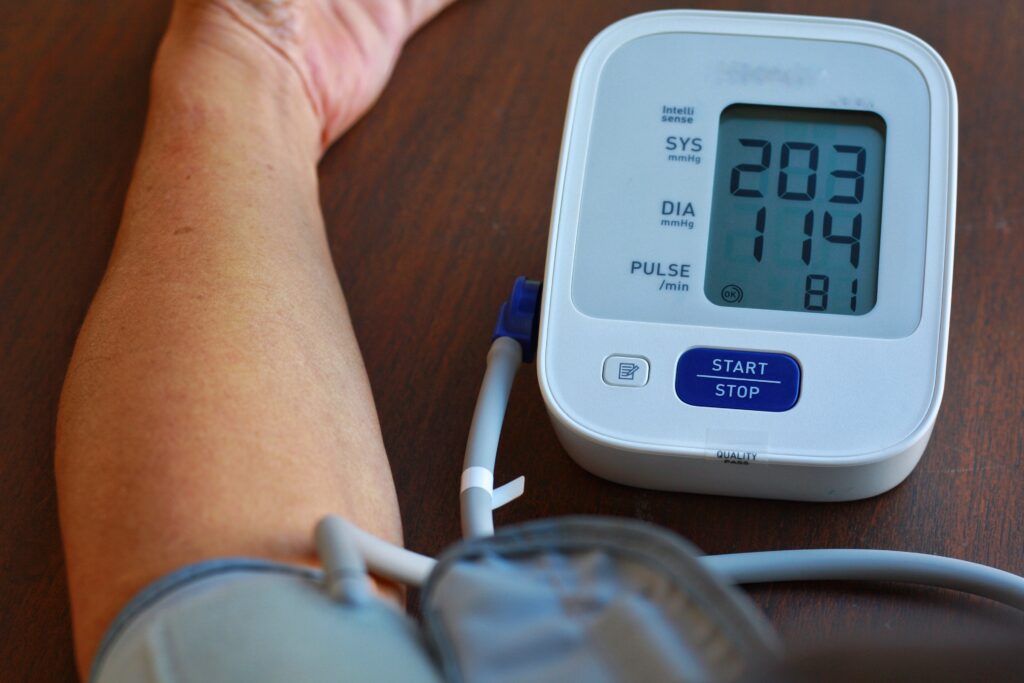
Your blood pressure numbers show up on a cuff at your doctor’s office, but the story they tell plays out in places most people never think to look, including the back of your eye. The retina is threaded with tiny blood vessels that are among the first in the body to show the effects of sustained high blood pressure, often years before any other symptoms appear.
At Vision Source Mandan, we routinely examine the retinal blood vessels as part of a comprehensive eye exam, and what we see can reveal important information about a patient’s overall cardiovascular health. Dr. Brittany Schauer, Dr. Wayne Aberle, and Dr. Danielle Dyke serve patients across Mandan, Bismarck, and the surrounding region, and connecting eye health to whole-body health is central to the care we provide.
What Happens to the Retina Under High Blood Pressure
The retina depends on a steady, well-regulated blood supply to function. When blood pressure remains elevated over time, the small arteries and arterioles supplying the retina come under sustained stress, and the damage accumulates gradually and silently.
The Condition Known as Hypertensive Retinopathy
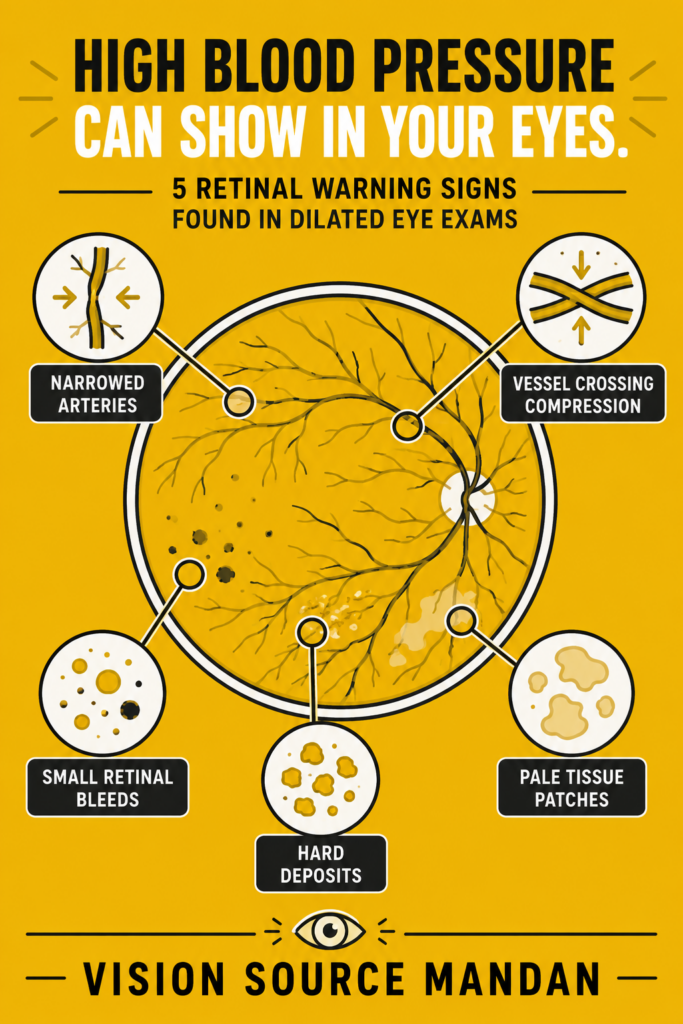
Hypertensive retinopathy is the clinical term for retinal damage caused by chronic high blood pressure. According to NIH research on hypertensive retinopathy, sustained blood pressure elevation causes changes that include arteriolar narrowing, arteriovenous nicking, retinal hemorrhages, hard exudates, and cotton-wool spots, all visible through a dilated eye exam. In advanced cases, swelling of the optic nerve can occur, which signals a medical emergency requiring immediate attention.
Why the Retina Reflects Systemic Health
The retina is the only place in the human body where blood vessels can be observed directly and without surgery. This makes a dilated retinal exam a uniquely powerful window into vascular health. Changes seen in the retinal vessels often mirror what is happening in the vessels of the heart, kidneys, and brain. A patient managing diabetic retinopathy alongside hypertension faces compounded risk, as both conditions stress the same delicate vascular network in the eye.
Warning Signs and Why They’re Easy to Miss
One of the most challenging aspects of hypertensive retinopathy is that it produces no noticeable symptoms in its early and moderate stages. Vision typically remains normal while damage accumulates in the background. By the time blurring, double vision, or vision loss appears, the condition has often progressed significantly.
This is why routine eye exams matter so much for anyone with high blood pressure or a family history of cardiovascular disease. The exam itself is painless, and what it can reveal about the state of your retinal vessels may be the earliest warning sign available. Conditions like age-related macular degeneration and glaucoma also involve vascular components, and patients with high blood pressure carry an elevated risk for both.
What We Look for During a Retinal Exam
A comprehensive dilated exam allows our team to evaluate the health of the retinal blood vessels in detail. The following are key findings we assess when evaluating a patient with known or suspected hypertension:
- Arteriolar narrowing: Early constriction of the small retinal arteries, often the first visible sign of prolonged pressure elevation.
- Arteriovenous nicking: A crossing point where an artery appears to compress an adjacent vein, indicating vessel wall thickening.
- Retinal hemorrhages: Small bleeds within the retinal tissue resulting from vessel rupture under sustained pressure.
- Cotton-wool spots: Pale patches indicating areas of reduced blood flow and localized tissue damage.
Identifying these changes early gives patients and their primary care providers critical information for adjusting blood pressure management before vision loss occurs.
Eye Care at Vision Source Mandan
Vision Source Mandan has been a trusted part of the Mandan and Bismarck communities since 1950, and our team understands that eye diseases rarely exist in isolation from the rest of the body. As your optometrist handles medical eye concerns, we coordinate with your primary care team to ensure the full picture of your health is considered. Dr. Schauer, Dr. Aberle, and Dr. Dyke bring decades of experience to every exam, and our practice combines advanced diagnostic technology with the kind of thorough, relationship-based care patients in this region have trusted for generations.
If you have high blood pressure or have not had a dilated eye exam recently, now is the right time to schedule one. Reach out through our contact form and let us take a close look at your retinal health.