

Every spring and fall, itchy, red, watery eyes send thousands of people reaching for antihistamines, but not every irritated eye is reacting to pollen. In some cases, what feels like a familiar seasonal flare is actually a bacterial or viral infection that needs professional care, and treating it like an allergy only delays healing.
At Vision Source Mandan, Dr. Brittany Schauer, Dr. Wayne Aberle, and Dr. Danielle Dyke work with patients across the Bismarck-Mandan area who come in frustrated, having spent weeks managing symptoms with over-the-counter drops that never quite worked. Our eye allergy treatment services are designed to get to the root of what is actually happening with your eyes, not just mask discomfort.
Why the Confusion Happens
Allergy season creates a layer of noise around eye symptoms that makes accurate self-diagnosis difficult. Pollen, mold, dust, and pet dander all trigger the same immune response: histamine floods the conjunctiva, causing redness, tearing, and itching. Bacterial and viral infections hit the same tissue and produce eerily similar results. When both arrive at the same time of year, it is easy to assume the cause.
The problem is that eye infections do not respond to antihistamines. Reaching for allergy drops when you have a bacterial infection allows the infection to persist, potentially spreading and causing more serious damage to the surface of the eye. According to the American Academy of Ophthalmology, an ophthalmologist uses a slit-lamp microscope to examine the conjunctiva, specifically to separate allergic conjunctivitis from infectious causes before recommending any treatment.
Key Differences Between Allergies and Eye Infections
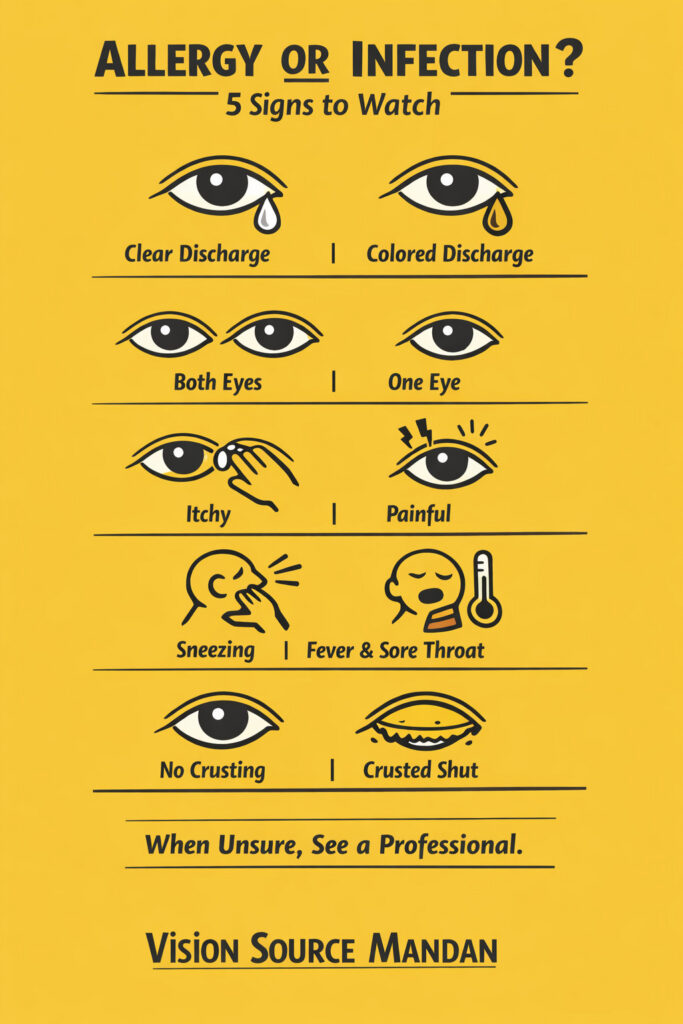
Understanding what to look for can help you communicate your symptoms more clearly when you come in for an exam. The following signs point more strongly toward infection rather than allergies.
- Discharge color and texture: Watery, clear discharge is more consistent with allergies. Thick, yellow, or green discharge suggests a bacterial infection.
- One eye vs. both eyes: Allergic reactions almost always affect both eyes at the same time. Infections commonly begin in one eye and spread.
- Pain and light sensitivity: Allergies cause itching and general irritation, but significant eye pain or sensitivity to light points toward infection.
- Accompanying symptoms: Allergy symptoms often include sneezing and nasal congestion. A bacterial infection may come alongside a sore throat or fever.
- Crusting after sleep: Waking up with eyes crusted shut is far more typical of an infection than of allergic conjunctivitis.
These distinctions are not always clean, and symptoms overlap enough that a professional exam remains the most reliable path to an accurate answer. Our team is trained to evaluate the full picture so treatment actually matches the condition.
When Allergies and Infections Occur Together
One scenario that catches many patients off guard is a true combination case. Allergy season leaves the eyes inflamed and vulnerable, and that low-grade inflammation can create an environment where eye infections and injuries take hold more easily. Rubbing itchy eyes introduces bacteria from the hands. Prolonged inflammation disrupts the protective function of the tear film.
Dr. Dyke often sees patients at Vision Source Mandan who assume their worsening symptoms are just a bad allergy season. What has actually happened is an initial allergic reaction opened the door to a secondary bacterial infection, and the two are now running at the same time. Managing only the allergy component in these cases leaves a real infection untreated.
This is also why we assess pink eye cases carefully rather than assuming a single cause. Conjunctivitis is an umbrella term covering allergic, viral, and bacterial inflammation, and each type calls for a different approach. A patient who had red, itchy eyes last spring may have a different underlying cause this year.
What Happens During an Exam?
When you come in with eye symptoms during allergy season, we do not guess. We examine the surface of the eye, assess discharge characteristics, review your health history, and consider whether you are showing signs of ocular surface disease or another underlying condition complicating things. The goal is a treatment plan tied to actual findings, not to whatever is most common in the season.
Antibiotic drops prescribed for a bacterial infection typically clear symptoms within a few days. Allergy treatments, whether drops or oral medications, are most effective when used consistently and appropriately for the specific allergens driving your reaction. Getting those details right matters.
See the Team at Vision Source Mandan For Help With Your Eye Infection Today
Vision Source Mandan has been caring for patients in Mandan, Bismarck, and the surrounding region since 1950, and our three-doctor team brings years of hands-on experience to the kinds of cases that do not fit a neat category. Whether your symptoms are rooted in seasonal allergies, an active infection, or both at once, Dr. Schauer, Dr. Aberle, and Dr. Dyke can give you a clear answer and a treatment path that works.
If your eyes have been red, irritated, or uncomfortable for more than a few days and over-the-counter remedies are not helping, do not wait out the season. Contact our office to schedule an appointment and let us help you see clearly again.