
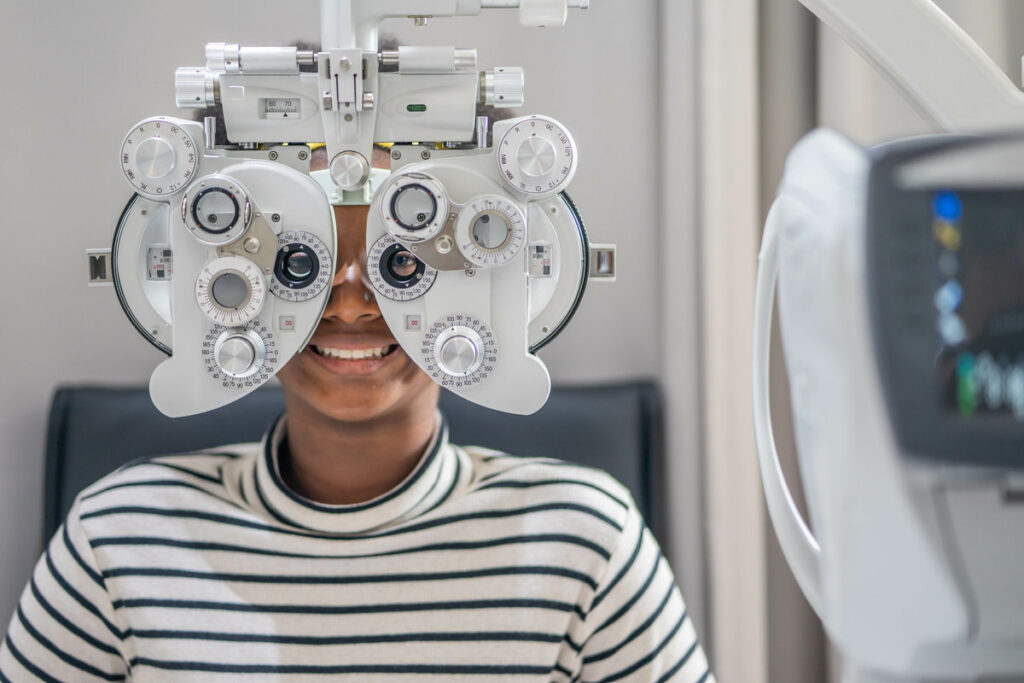
Every back-to-school season, thousands of parents sit in an optometrist’s chair and hear the same words: Your child’s prescription has gone up again. For many families, this feels like an unavoidable cycle, new lenses, same story, but the progression of nearsightedness in children is not something you simply have to accept. The good news is myopia control is a real, proven approach, and starting it early makes a meaningful difference.
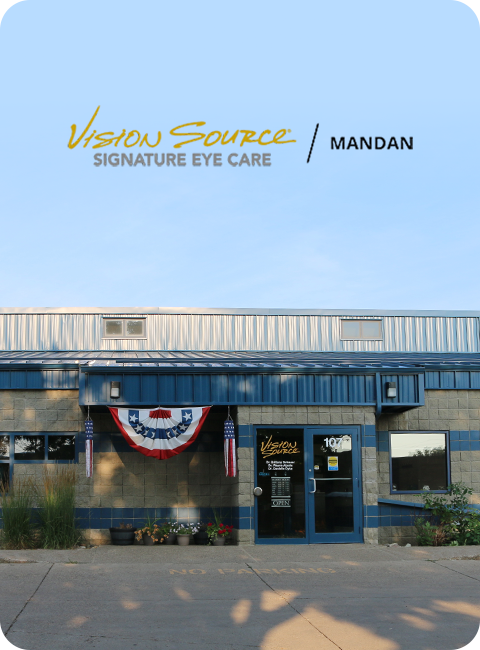
At Vision Source Mandan, Dr. Brittany Schauer, Dr. Wayne Aberle, and Dr. Danielle Dyke work with families across the Mandan and Bismarck area who are watching their children’s prescriptions climb each year. Our myopia management program is built around the understanding nearsightedness is not just a vision inconvenience, it is a condition with real long-term health implications, and there are evidence-based ways to slow it down.
Why Myopia Keeps Getting Worse
Myopia occurs when the eye grows too long from front to back, causing light to focus in front of the retina rather than directly on it. Once the eye begins growing this way in childhood, it tends to keep growing. Standard single-vision glasses or contacts correct how your child sees, but they do not address the underlying growth of the eye, which is why the prescription often increases at each annual exam.
The rate of progression is highest during the school-age years, roughly between ages 6 and 14, and tends to slow as children reach their late teens or early twenties. According to the National Eye Institute, about 41.6% of Americans are nearsighted, up from 25% in 1971, and researchers point to reduced outdoor time and increased near work as contributing factors. The earlier myopia begins and the faster it progresses, the higher the risk of developing serious complications like glaucoma or retinal detachment later in life. This is why intervention matters, and why waiting is not always the safest choice.
Myopia Control Options We Offer
Our team takes a personalized approach to myopia control, evaluating each child’s rate of progression, age, lifestyle, and eye health before recommending a treatment path. Several well-studied options are available, and for many children, a combination works best.
The following are the primary approaches we use with our patients.
Multifocal contact lenses: These are designed to slow eye growth by adjusting how light falls on the peripheral retina. Clinical trials have shown meaningful reductions in myopia progression when started at a young age.
Orthokeratology (Ortho-K): Worn overnight, these rigid lenses gently reshape the cornea so children can see clearly during the day without lenses while slowing axial elongation.
Low-dose atropine eye drops: Applied nightly, atropine at low concentrations has a strong track record for slowing myopia progression with minimal side effects.
Essilor Stellest lenses: These FDA-approved eyeglasses use H.A.L.T. technology to create a signal discouraging the eye from continuing to grow, making them an excellent option for children who are not ready for contact lenses.
Every child is different, and Dr. Dyke emphasizes the best results come from pairing the right treatment with consistent monitoring. Finding the right fit is a collaborative process, and we adjust our approach as your child grows.
When Is the Right Time to Start?
One of the most common questions we hear from parents is whether it is too early to start myopia control. The research is clear: earlier intervention leads to better outcomes. A child who starts treatment at age 8 with a moderate prescription has more opportunity to slow progression than one who starts at 13. The children’s eye exams we perform are specifically designed to detect not just the current prescription but also the patterns suggesting a child is at higher risk for rapid progression.
Factors like family history, how quickly the prescription has changed in recent years, and how much time a child spends outdoors versus on screens all influence our assessment. If you are curious about whether genetic risk factors may be playing a role in your child’s vision, that conversation is always worth having. And for children who do move into contact lenses as part of their myopia control plan, our contact lens fitting process is thorough, patient, and age-appropriate.
Schedule Your Child’s Exam at Vision Source Mandan
Vision Source Mandan has been caring for patients and their families in Mandan, Bismarck, and the surrounding communities since 1950. Our team brings decades of combined experience to pediatric eye care, and as a member of the Vision Source network, we have access to the latest technology and treatment options as they become available.
If your child’s prescription has been increasing year after year, now is a good time to ask whether myopia control could help. Contact our office to schedule a comprehensive exam with Dr. Schauer, Dr. Aberle, or Dr. Dyke, and let us help you take a more proactive approach to your child’s vision.
Testimonials
What Our Clients Say

My annual eye exam is always an excellent experience with Dr. Danielle Dyke. The exam is always thorough, and Dr. Dyke takes the time to explain my eye health in a way I can understand. The Vision Source eye clinic is modern, clean, and the staff is very welcoming. I always feel comfortable and well-cared for at my appointment. I highly recommend Dr. Dyke and Vision Source!
Patricia G.
Dr. Schauer did an amazing job getting my eye infection cleared up. As I sat in my room waiting my turn, because I had a last minute appointment, I could hear her working with a family next door that had young kids.
Fred S.
Whenever I have had eye issues, they have made efforts to get me in asap. Which I really appreciate. I have had Dr. Aberle and Dr. Dyke and they are both excellent. Recently, I saw Dr. Aberle for a chronic eye problem in one eye & he fixed the problem. Honestly, it felt like a miracle. The office staff is also very pleasant to deal with.
Sheila S.
I've literally been a lifelong customer since 5th grade when it was Dr. Little! Dr. Schauer has taken over since Dr. Little retired. It's always a good, friendly experience with all of the staff there. I've never had a bad experience.
Bill S.
The front desk people are very nice and friendly got called in to see Wayne before my appointment time Vision Source has very friendly staff and the clinic is very clean will always be a patient to Vision Source.
Deborah C.
I was greeted by the front desk very efficiently. The person who did the first part of my history and did the testing like the little spritz in my eyes, etc, was very good. I really like my eye doctor, I feel that I get all my questions answered as well as she explains what she is seeing when she is examining my eyes.
Dolly A.
Need to Schedule an Appointment?
WE ARE Accepting New Patients
Your vision is precious—trust it to the experienced team at Vision Source Mandan, where we treat you like family
while providing the highest standard of eye care available in the Bismarck-Mandan area.
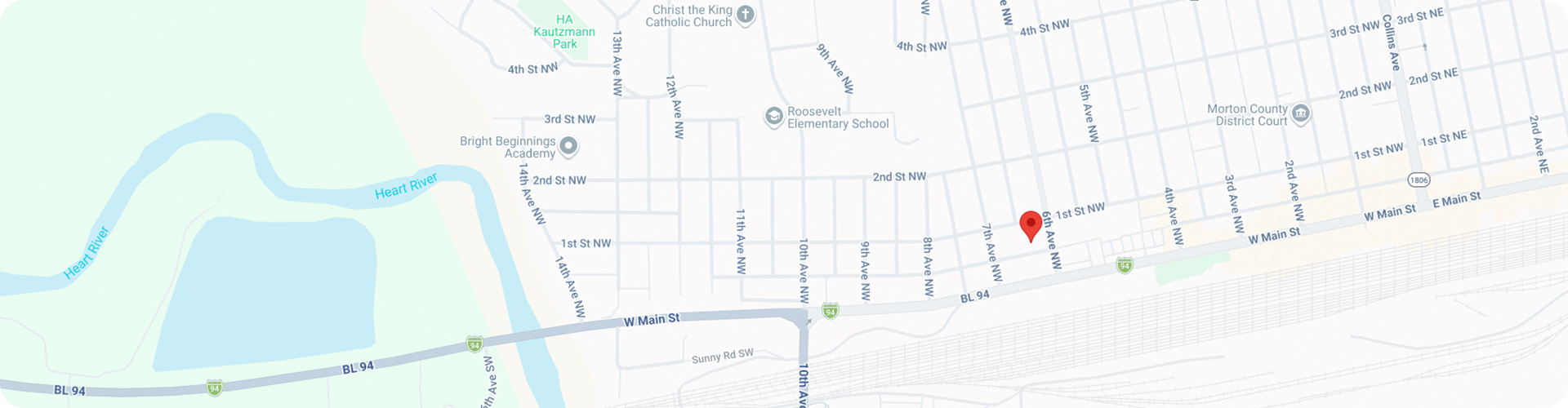
MAP

Contact Us
Office Hours
Monday 8:00am - 5:00pm
Tuesday 8:00am - 7:00pm
Wednesday 8:00am - 5:00pm
Thursday 8:00am - 5:00pm
Friday 8:00am - 1:00pm
Saturday Closed
Sunday Closed
* We are closed from 12:00 pm - 1:00pm on the 2nd Thursday of each month for a team meeting.
© 2026 Vision Source Mandan. All Rights Reserved. Accessibility Statement - Privacy Policy - Sitemap
Powered by: 