
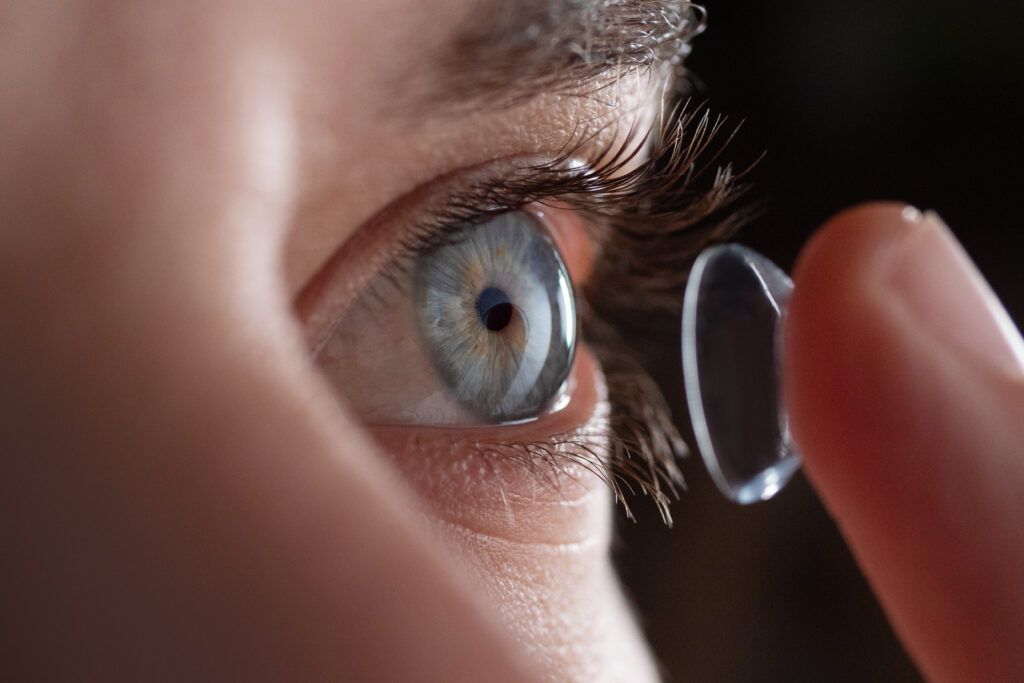
Your contacts felt fine for months, and then one morning you put them in and something just feels off, a scratchy, burning sensation that no amount of blinking seems to fix. Contact lens discomfort is one of the most common reasons contact wearers consider giving up their lenses entirely, but the underlying cause makes all the difference in how to respond.
At Vision Source Mandan, we work with contact lens wearers across Mandan and Bismarck to figure out exactly why their lenses are causing trouble and what to do about it. Many of our patients are surprised to learn that a simple solution switch resolves their discomfort, while others need a more thorough evaluation to protect their eye health.
Why Contact Lenses Become Uncomfortable
Discomfort doesn’t always mean something is seriously wrong, but it should never be ignored. Contact lenses sit directly on the cornea and interact with your tear film throughout the day, which means even small changes in your routine, environment, or eye health can create noticeable irritation.
The Role of Contact Lens Solutions
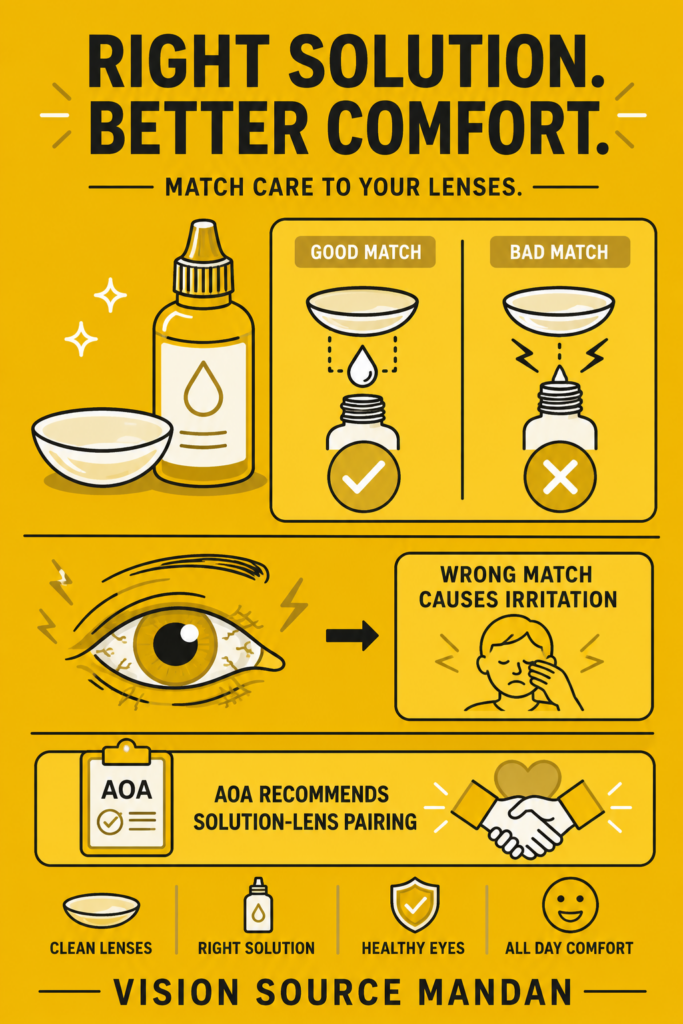
One of the most overlooked culprits is the contact lens solution itself. Multipurpose solutions contain preservatives that can trigger sensitivities in some wearers, and a new formula or brand swap can sometimes produce reactions even if you’ve been wearing lenses comfortably for years. The American Optometric Association notes that proper contact lens care systems are carefully selected to be compatible with specific lens materials, and a mismatch can lead to chronic irritation.
Environmental and Behavioral Factors
Environmental factors also play a role. North Dakota winters bring dry, low-humidity air that strips moisture from contact lenses faster than usual, and seasonal allergies can cause lenses to trap pollen against the eye. Wearing lenses beyond their recommended replacement schedule is another common source of discomfort that patients often overlook.
Signs You Can Try Adjusting at Home
Not every episode of contact lens discomfort requires an immediate appointment. The following signs suggest that a simple adjustment may resolve the issue:
- Solution sensitivity: If your discomfort started shortly after switching brands or formulas, try returning to your previous solution or ask about a preservative-free alternative.
- Overwear fatigue: If your eyes feel strained or dry by late afternoon, reducing your daily wear time or switching to daily disposable lenses may help.
- Mild dryness: Lubricating drops formulated for use with contact lenses can relieve occasional dryness without requiring a lens change.
- Environmental irritants: During high-pollen days or extremely dry weather, giving your eyes a break with glasses can reduce inflammation.
These adjustments are worth trying first, but they are not a substitute for professional evaluation if symptoms persist or worsen. If at-home changes don’t resolve the issue within a day or two, it’s time to call us.
When to See Your Eye Doctor Right Away
Some symptoms signal that something more serious may be happening, and continuing to wear contacts can make the situation worse. Dry eye syndrome is one condition that frequently masquerades as general contact lens discomfort, and it requires targeted dry eye treatment rather than a solution swap.
You should remove your lenses and contact us promptly if you notice redness that doesn’t improve after removing your lenses, persistent pain or a sharp sensation, unusual discharge or crusting, light sensitivity, or any change in your vision while wearing your contacts. These can be signs of a contact lens-related eye infection or corneal irritation that needs evaluation before you put lenses back in. Emergency eye care may be appropriate if you experience sudden vision changes or significant eye injury, but for most contact lens concerns a scheduled visit with our team is the right first step.
Getting the Right Fit for Long-Term Comfort
Sometimes discomfort comes down to the lens itself. Not every lens brand or material suits every patient, and a proper contact lens fitting evaluates the fit, oxygen permeability, and lens material against your specific corneal shape and tear film. A lens that fits well and matches your eye chemistry can dramatically reduce chronic discomfort.
Our team takes the time to assess not just your prescription, but the full picture of your eye health. That evaluation is what separates a good contact lens experience from one that constantly feels like a compromise.
Contact Vision Source Mandan for Contact Lens Discomfort
At Vision Source Mandan, Dr. Brittany Schauer, Dr. Wayne Aberle, and Dr. Danielle Dyke have been helping patients enjoy comfortable, clear contact lens wear for decades. Our practice has served Mandan, Bismarck, and surrounding communities for over 70 years, building the kind of long-term relationships where we know your history and can spot changes early.
If your contacts aren’t feeling the way they should, don’t push through it. Reach out to our team through our contact form and let us help you find a solution that works.