
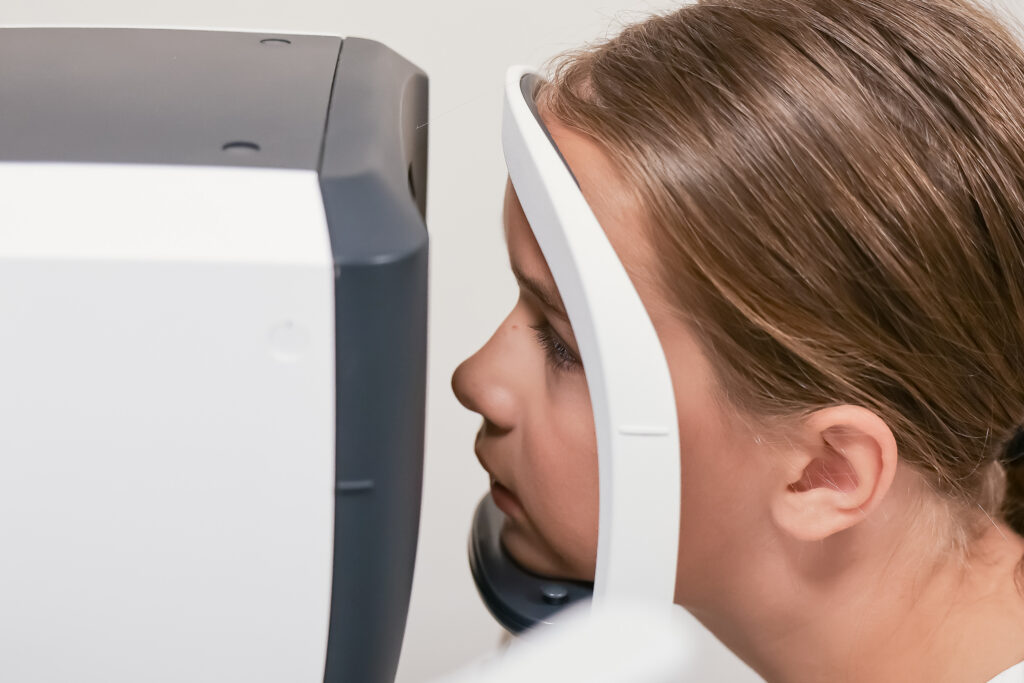
If you wear glasses or contact lenses for nearsightedness, you may have already wondered whether your child is likely to end up in the same situation. It is a fair question, and the answer is nuanced. Genetics does play a real role in myopia development, but they are only part of the picture. Understanding what puts a child at risk can help parents take meaningful steps toward protecting their child’s vision before nearsightedness becomes a problem or progresses further.
At Vision Source Mandan, our myopia management program is built around exactly this kind of proactive thinking. Drs. Brittany Schauer, Wayne Aberle, and Danielle Dyke work with children and families throughout the Mandan and Bismarck region to identify risk factors early, monitor eye development over time, and intervene when the evidence supports doing so.
What the Research Says About Genetics and Myopia
The connection between family history and myopia is well established. According to the National Eye Institute, children are at higher risk for nearsightedness when family members are also nearsighted. The more nearsighted a parent is, the higher the likelihood their child may develop the condition, and having two myopic parents raises the risk further than having just one.
Genetics does not tell the whole story, however. Scientists believe myopia results from a combination of inherited tendencies and environmental influences. Children who spend significant time on near work, such as reading, using screens, and doing close-up activities, are more likely to develop myopia, even without a strong family history. Research has consistently shown that children who spend more time outdoors tend to develop myopia less often, though researchers are still working to understand exactly why.
Environmental Factors That Interact With Genetic Risk
For children who already carry a genetic predisposition, certain lifestyle habits can accelerate or slow myopia development. The most commonly discussed risk factors include extended near work, limited outdoor time, and early onset of screen use. Children who develop myopia at a young age, especially before age 10, are more likely to see it progress rapidly through their school years.
This interaction between genes and environment is part of why our team emphasizes comprehensive children’s eye exams starting early and continuing annually. A school vision screening is not a substitute for a full exam. School screenings miss a significant number of vision problems, and many parents are surprised to learn their child has myopia after assuming they passed their screening. Getting a proper exam is the only reliable way to know what is actually happening with your child’s eyes.
What Myopia Can Lead to If Left Unmanaged
Myopia is not simply an inconvenience. High myopia, where the prescription becomes quite strong over time, is associated with increased risk for serious eye conditions later in life, including retinal detachment, early cataract development, and glaucoma. Managing the progression of myopia during childhood reduces the likelihood of reaching those higher prescription levels as an adult.
Children who are amblyopic or at risk for amblyopia present an additional layer of complexity. At Vision Source Mandan, we use Shaw Lens technology for these patients to support proper visual development alongside myopia concerns. For children experiencing progressive myopia more broadly, we offer the newly FDA-approved Essilor Stellest eyeglasses, a clinically proven option for slowing axial elongation. Our team also relies on binocular training rather than outdated patch therapy when vision therapy is part of a child’s care plan.
How We Approach Myopia Management
Our approach to myopia management starts with a thorough assessment of each child’s current prescription, eye growth measurements, and risk factors. From there, our doctors discuss treatment options suited to the child’s age, lifestyle, and prescription trajectory. The goal is not just to correct today’s vision but to slow how quickly the prescription changes year over year.
For children whose visual development involves concerns beyond myopia, such as a lazy eye, our team addresses those conditions with equal care and attention. We take time to explain findings to parents clearly and make sure every family leaves understanding both the diagnosis and the path forward.
Schedule an Eye Exam at Vision Source Mandan
If you are myopic and wondering about your child’s risk, or if your child has already shown signs of nearsightedness, the most important next step is getting them in for a comprehensive eye exam. Dr. Schauer, Dr. Aberle, and Dr. Dyke bring decades of combined experience and a genuine commitment to the children and families of our region. Learn more about Dr. Schauer’s background and approach on her provider profile. Vision Source Mandan has served the region since 1950, and our team is ready to help your child build a strong foundation for lifelong vision health. Reach out through our contact page to schedule an appointment and let us help you stay one step ahead of myopia.